Saturday, 30 May 2015

Task 3, 4, 5, 6

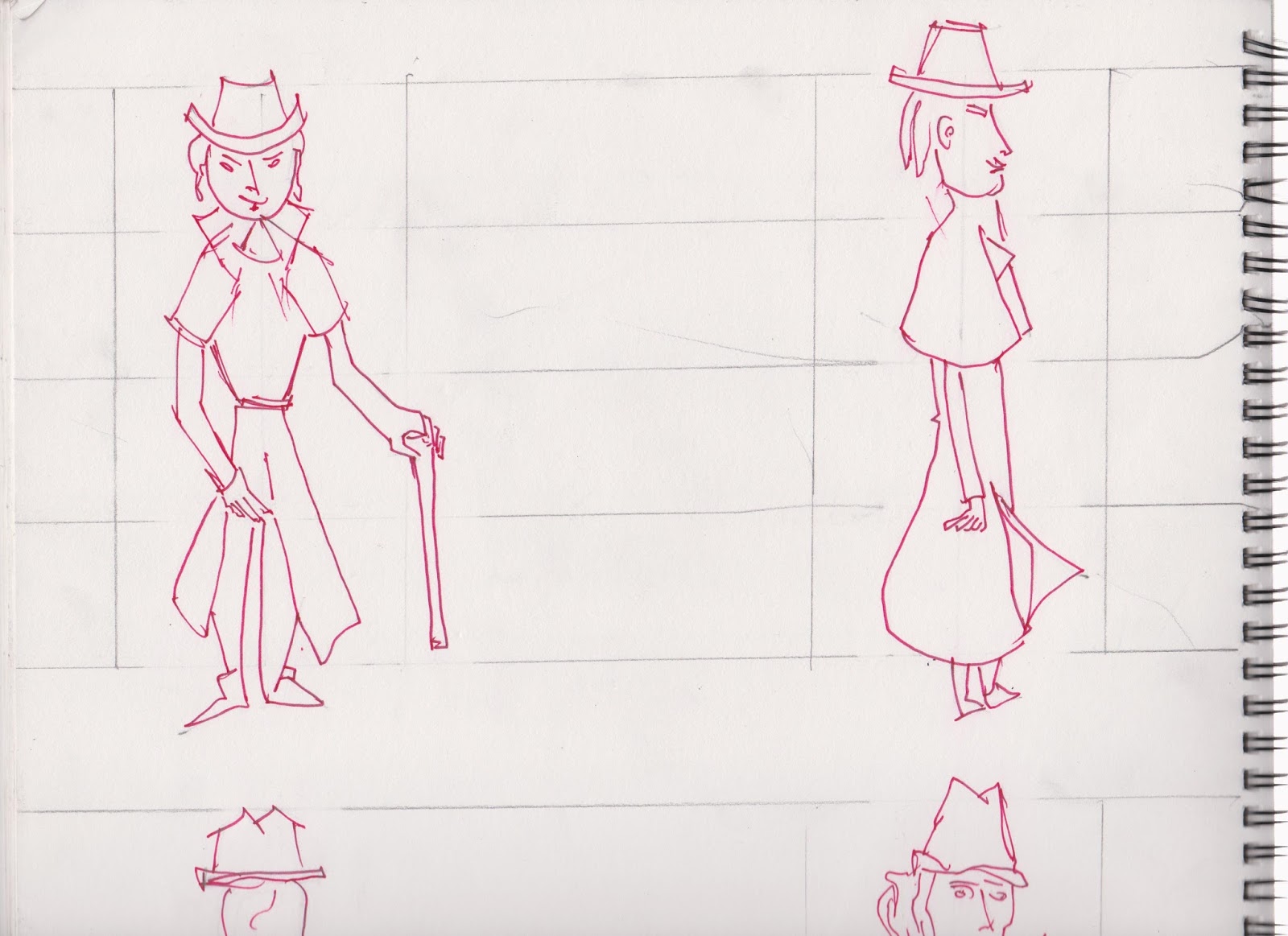
Character Designs; Drawings


Fig 1
Doctor:  kaire
kaire is in charge of medical issue in the expedition.
He makes sure everyone is medically fit  each day, he also take analysis of the environment around were they stay to prevent any disease or viral outbreak that could jeopardise the mission.    


Fig 2
Bodyguard:  Snipes 
He is in charge of security, protect everyone at all cost.
Snipes never sleeps.


Fig 3
Scientist:  Ela
Ela is the chief scientist, one of the best in the country. He has more experience in expedition than anyone else, he is considered a genius. 


Fig 4
Assistant scientist: Green 
The assistant to Ela, he keeps records of all the days activities and analysis them. He was also the person who volunteered to enter the portal, when it was considered save to try.


Fig 5
Boss: Snitch
The CEO of TEVIC  industries, he sponsored the expedition locating the portal which was detected in Mantin in Malaysia. He loves power and was consumed by it.   


Poster;
Fig  6


Environment

                                                                        Fig 7

Main Characters Digital.
Fig 8 . Green

Fig 9. Snitch


Sunday, 10 May 2015


Characters story and Myth. 


The Myth of the Minotaur


                       Fig 1                                                       Fig 2


                           Fig 3


              One of the most intriguing myths of ancient Greece is the myth of the Minotaur on the island of Crete.
King Minos was one of the three sons born to Zeus and Europa. When their step-father, King Asterion, died, Minos declared himself king and appointed his brother Sarpedon as lawmaker of all the islands. Sarpedon questioned his brother’s authority, but Minos said that it was the will of the gods for him to become king. As proof, he sacrificed a bull to the god Poseidon and then asked the god to send a new bull for the same purpose. Poseidon listened to his request and sent a beautiful white bull from the sea. King Minos as well as the citizens of Crete was impressed, and because the bull was so beautiful, Minos set it free and sacrificed a different bull.
Minos was married to the goddess Pasiphae. Together they had many children, some of which were Ariadne, Phaedra, Glaucus and Androgeus. When Poseidon realized that Minos didn’t sacrifice the white bull, he caused Pasiphae to fall in love with the animal. Pasiphae desperate from her love for the bull asked for help from the sculptor and engineer Daedalus. Daedalus built her an empty wooden cow. It was so beautiful that the white bull was tricked and fell in love with it. Pasiphae then went inside the wooden cow and loved the white bull. The result of this union was the Minotaur, a powerful beast with a human body and the head of a bull.
When Minos saw the beast he was furious and asked Daedalus to build a labyrinth with unlimited corridors and cells where the Minotaur could be held captive. This is what Daedalus did built a great labyrinth that the Minotaur, and people who entered it, could never get out of. The labyrinth is believed to be the one that has been found in Knossos, Crete.
Later on, when Minos son Androgeus was killed by the Athenians, Minos declared war against Athens and won. As a punishment, he obliged Athens to send 7 young men and 7 young women to be sacrificed to the Minotaur every 9 years. It is worth mentioning that King Minos was in direct contact with Zeus, which means that all of this had the indirect approval of the god. The death of the Minotaur finally came from the Greek hero Theseus, son of Aegeus, king of Athens, with the help of Minos’s daughter, Ariadne, who fell in love with Theseus.

Summary

It is intriguing to again see the involvement of the gods in human affairs and the punishment they would inflict when men were not obedient to them. The birth of hybrids half human, half animal beings is also a common pattern in myths all over the world. Is it possible that those hybrids did exist, and if so, who where their creators? In most myths it appears that gods are directly related to their creation. If that’s true, how did they do it? On the other hand, we have conventional archaeology suggesting that these ‘primitive’ ancient peoples simply had a vivid imagination.

Reference:  By John Black, London, An Author and Researcher 


The Myth of the Centaur.
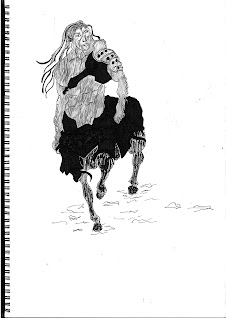

       
                               Fig  4                                                          Fig 5

The centaur probably began as a horse totem of a tribe of early Greeks in prehistory. The earliest drawings of hippo centaurs (a kind of demon given human form, or kallikantzaroi, in ancient Greek myth) show men wearing fetishes of hindquarters of horses joined to their waists. These hobby-horse fetishes, common (in varying form) to European crop and fertility rituals, only later became depictions of human torsos joined to actual horse bodies. The hypothesis that the centaur represents a terrified tribal reinterpretation of a horse and rider is probably without merit.
The Greek love for the horse led to the ennoblement of the centaur in myth and legend (the only version of the kallikantzaroi to be so honored). The Centaur Chiron was known for his wisdom and healing abilities. Other centaurs did not fare so well in myth: Nessus was killed by Hercules for trying to rape (variously) his wife or a woman under his charge, and other centaurs were renowned for their weakness for drink. The centauromachy - the depiction of one or more of the fights between humans and centaurs in myth - became a popular feature of Greek art. The centaur was also used by some writers to symbolize man's dual nature as an intellectual creature (the human half) which was also a physical animal (the horse half).
In the Medieval period, the centaur fared more poorly, often becoming a demonic image. Nevertheless, the centaur remained a popular character in art, no doubt due to the vast influence of Greek art and literature on Western culture.

Summary  
In modern times, the centaur has reappeared in art and literature, especially in the genre of fantasy. C.S. Lewis' The Narnia Chronicles and Piers Anthony's Xanth series have prominent centaur characters. Science fiction has used the character as well; John Varley's Titan, Wizard, Demon series, Jack Chalker's Well world series, Walter Jon Williams's Knight Moves, Elf Sternberg's The Journal Entries series, and my own (as yet unpublished, gripe, gripe) homo centuries all feature prominent centaur characters.


References
Dr, A. F., 2011. Greenville, south Carolina, USA: ISBN.


The Myth of the Cyclops.


                        Fig 6                                                                    Fig 7


The Cyclops were represented as strong, one eye giants in Greek Mythology. Their name is also spelled Cyclopes, and, as usual with Greek words, the letter K may be used in place of the C.

According to the Greek epic poet Hesiod, the Cyclops were the sons of Uranus (Sky) and Gaia /Ge (Earth). Hesiod names the Cyclops Argos, Steropes, and Brontes. The Titans and Hecatonchires (or Hundred-handers), both known for their size, may have been other offspring of Uranus and Gaia.
Even though Uranus was their father, he lacked paternal instincts. Instead, he had the nasty habit of keeping all his children imprisoned -- inside their mother, Gaia, who wasn't very happy about it.
When the Titan Cronus decided to help his mother by overthrowing his father, Uranus, the Cyclops helped. But they were no better off with Cronus than Uranus. Instead of rewarding them for their assistance, Cronus imprisoned them in Tartarus [see: The Greek Underworld] 

Summary.
Zeus who, in turn, overthrew his own father (Cronus), set the Cyclops free. Since they were metal workers and blacksmiths, they repaid Zeus with a thank you gift of thunder and lightning. The Cyclops also gifted the gods Poseidon with a trident and Hades with the Helmet of Darkness.
In Modern times, stories of the Greek mythology is showed in movies today e.g Clash of the Titans, 300 and Immortals etc.

Reference; By N.S.Gill, ancient/classical history expert


Thursday, 9 April 2015

Task 3
Topic: Friendship


Experimental/ scanned / Edited Pictures.

                                                                              Fig 1

Fig 2


Fig 3

Fig 4


Fig 5


Fig 1(freestyle)

The picture was taken while in motion. 


Fig 2( Into the future)
looking into the future, means in deep thoughts about life from the beginning still date


Fig 3(Bunding)
keeping the friendship better every single day as time passes by.


Fig 4(Fun)
Fun has a lot of benefit, if you look at the picture above you. Their faces and facial expression
shows they are. Fun bunds friendship. 


Fig 5(Exploit)
Exploitation with friends is the best and even alone makes you know new people too.


FINALLY


                     In here, there are eight pictures. All representing the same meaning but in different ways. Friendship is not just having fun or going out people you call friends, its being able to understand, help, communicate and stand by them when they are down. Its having each others back in anytime. 
                     The first picture at the top left shows a group of friends going for horse riding, having fun and interacting to each other. 
                     Top right shows two guys kissing a girl on he chick. kissing can indicate many things
 its all depends on how its shown.
                     Interacting with each other, expressing oneself how the feel about  each other. Its bonds the trust between them.
                     The central picture (wavy), people taking selfie. Its documentation of their time together.


Monday, 6 April 2015

Character Design and Creation.

Minotaur.

fig 1(side and back view)


Fig 2 ( Front View)

               MINOTAURUS (Minotaur’s), a monster with a human body and a bull's head, or, according to others, with the body of an ox and a human head; is said to have been the offspring of the intercourse of Pasiphae with the bull sent from the sea to Minos, who shut him up in the Cnossian labyrinth, and fed him with the bodies of the youths and maidens whom the Athenians at fixed times were obliged to send to Minos as tribute. The monster was slain by Theseus. It was often represented by ancient artists either alone in the labyrinth, or engaged in the struggle with Theseus

              THE MINOTAUROS (or Minotaur) was a bull-headed monster born to Queen Pasiphae of Krete after she had coupled with a bull.
The creature resided in the twisting maze of the labyrinth, where he was offered a regular sacrifice of youths and maids to satisfy his cannibalistic hunger. He was eventually destroyed by the hero Theseus.
              The Minotauros' proper name Asterion, "the starry one," suggests he was associated with the constellation Tauros.  (www.in2greece.com)


Centaur

Fig 1(side view)

Fig 2(Front view)


Fig 3(Back view)

              The Centaur's are half man, and half horse. They have the body of a horse but, in place of the horses head the have the torso, head and arms of a man. Most are wild and savage, known for lustfulness and drunkenness. The exception is the wise Centaur Chiron.
The father of Centaurs was Centaurus, who was held in disrepute by both men and gods. Some accounts claim that he was the son of Apollo and Stilbe but, the more interesting accounts say he was fathered by Ixion. He gave birth to the race of Centaurs by mating with Magnesium mares.


             The pivotal event in the history of the Centaurs was their war with the Lapiths. King Peirithous of the Lapiths inherited part of Thessaly from his father Ixion. The Centaurs as grandsons of Ixion claimed they were entitled to part of the land. After a first round of fighting a peace was arranged. Peirithous invited the Centaurs to his wedding. Here the Centaurs became drunk, then violent. Under the lead of Eurytion they attempted to carry off the Lapith women. In the resulting battle the Centaurs were defeated and driven from the area.  (www.in2greece.com)


Cyclops

Fig 1 (front view)

Fig 2 (side view)


Cyclops were giants of the Greek Mythology with only one eye in their forehead, children of the earth, Gaea .They ate humans, were thick and had given Zeus the thunder and lightning as a sign of gratitude when he released them from the underworld. They worked as Hephaestus helpers under the volcano Etna making Zeus's lightning's, but were killed by Apollo as a revenge for Zeus's killing his son Asclepius.

The most famous Cyclops was Polyphemus who Odysseus blinded after making him drunk.


Weapons

Fig 1


Fig 2


Thursday, 2 April 2015

Task 4
Date; 3/04/15


Report On Gempak Starz Visit.
       Gempak  Starz is renowned comic and graphic company both local and international, the have local and foreign  artist working with them. This helps them to advance so fast in creativity. A Life Filled with Inspiration, Energy, Joy and Discovery is their Vision and Creative Life.

Entrance 

In side the studio

In Gempak Starz the have different sections were all the works pass through
The Story line/Editing  studio
The Sketch studio
The Tracing/story board studio
The Digital/painting Studio.
The Printing studio.


Gempak Starz have various products such as
Graphic novels
Magazines
Marchandise 
Novels
Toys 
T-shirt
Watches 
Tickets.

During the trip did some exploitation and had fun too 
The Wall of Creativity.

Artist at work

Artist at work

Me

Sample Drawings

Sample Drawings

exhibition room

friends